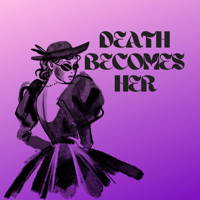
Overview
Synopsis
In the glamorous yet cutthroat world of Hollywood and Broadway, self-obsessed actress Madeline Ashton reigns supreme, captivating audiences with her beauty and charisma in her one-woman show Me! Me! Me!. Her life is upended when her longtime frenemy, aspiring writer Helen Sharp, arrives triumphantly engaged to the handsome plastic surgeon Ernest Menville. What begins as a tense reunion quickly spirals into betrayal as Madeline seduces Ernest at her lavish home, stealing him away and marrying him in a extravagant ceremony. Devastated, Helen is institutionalized, where her obsession with revenge against Madeline festers over the next decade, fueling fantasies of murder while Madeline's star begins to fade with the inexorable march of time.
Ten years later, Madeline and Ernest's marriage has soured into a loveless routine, with Madeline desperately clinging to her youth amid career setbacks and Ernest drowning his regrets in alcohol as a Hollywood surgeon. They attend Helen's book launch, only to discover her transformed into a youthful, successful beauty, openly flirting with Ernest and humiliating Madeline about her aging. In a panic, Madeline seeks out the enigmatic Viola Van Horn, a mysterious woman with a secret elixir promising eternal perfection. After drinking the potion—which restores her beauty but comes with dire warnings about self-preservation—Madeline returns home to find Helen plotting her demise with Ernest. A violent confrontation ensues, culminating in Madeline's fatal fall down the stairs, only for her to miraculously revive, her body now indestructible but grotesquely broken.
As the supernatural truth unravels, Viola reappears to chide Madeline for her recklessness, while Ernest rushes his "undead" wife to the hospital, confirming her clinical death yet persistent vitality. Helen, having secretly imbibed the potion as well, is shot by Madeline in retaliation, leading to a chaotic cycle of escalating violence: impalements, decapitations, and shotgun blasts that leave both women mangled but unkillable. Coerced into service, a drunken Ernest uses his surgical skills—armed with glue, clay, and spray paint—to patch them up, all while firing Madeline's loyal assistant Stefan to cover their tracks. Realizing they need Ernest for ongoing "maintenance," the women scheme to force the potion on him during a lavish immortal ball hosted by Viola, but Ernest rejects immortality, fleeing in terror and meeting an apparent demise at Viola's hands.
Fifty years on, a reconciled Madeline and Helen maintain their gravesite rendezvous, having forged an unlikely bond in eternity, supporting each other's decaying forms with humor and mutual dependence. They encounter an elderly Ernest, who survived his fall, built a fulfilling life with a nurse, and fathered a family—everything the immortal duo can never have. Though a pang of envy strikes, the women embrace their endless rivalry-turned-friendship, walking off together into the sunset of immortality, forever young, forever flawed, and forever without a true ending.
Show Information
Context
Death Becomes Her the musical emerges from the dark comedic vein of its source material, the 1992 Universal Pictures film directed by Robert Zemeckis and starring Meryl Streep, Goldie Hawn, and Bruce Willis. The original movie, a satirical black comedy written by Martin Donovan and David Koepp, skewers Hollywood vanity, the ravages of aging, and female rivalry under patriarchal pressures, blending slapstick horror with sharp social commentary on beauty standards. Adapted for the stage, the
to read the context for Death Becomes Her and to unlock other amazing theatre resources!Characters
Character Portrayals
See StageAgent members who have performed roles in Death Becomes Her.
Want to be featured on this page? Update your credits.
Songs
Showing 8 of 24 songs
A song with an asterisk (*) before the title indicates a dance number.
Themes, Symbols & Motifs
THEMES
Vanity and the Pursuit of Eternal Youth
In Death Becomes Her, vanity drives the central conflict, portraying the obsessive quest for unchanging beauty as a hollow, destructive force that warps relationships and self-perception, particularly through the lens of aging women in a youth-obsessed industry. Madeline Ashton's opening number "For the Gaze" exemplifies this, as she performs directly to the audience, embodying the performative narcissism of stardom while lamenting the
to read about the themes, symbols and motifs from Death Becomes Her and to unlock other amazing theatre resources!Key Terms
An adaptation is a reworking of a story from one medium or cultural context into another, such as turning a novel into a play or updating a classic play’s setting. Adaptations often reinterpret themes, characters, and style for new audiences. They can range from faithful recreations to bold reimaginings.
The antagonist is a character who opposes the protagonist and creates conflict within the story. They are not always villains but are critical to the development of dramatic tension.
A powerful, resonant singing technique used in musical theatre to project high notes with chest voice.
A vocal technique blending chest and head voice to create a strong yet flexible sound for higher pitches.
The process of designing, sewing, and assembling costumes for a theatrical production.
A chart or document listing what each character wears in each scene, used to track costume needs and changes.
Counterpoint is a musical technique where two or more independent melodies are combined and performed simultaneously. Each line maintains its own rhythm and contour, yet together they create harmonic richness and complexity. This interplay adds texture, depth, and dynamic contrast to a piece of music.
A genre that combines elements of humor and morbidity, exploring serious themes through satire or irony.
A form that emphasizes movement over dialogue, blending dance and drama for expressive storytelling.
Slapstick is a type of physical comedy that relies on exaggerated actions, pratfalls, and humorous accidents to provoke laughter. It often includes broad movements, funny sound effects, and comic violence, such as someone slipping on a banana peel or being hit with a harmless object. The style originated in commedia dell’arte and became popular in vaudeville, silent film, and stage comedy.
Wit in theatre refers to the quick, clever use of language to create humor or reveal deeper truths about characters and situations. It often relies on sharp wordplay, irony, or unexpected turns of phrase to keep audiences engaged. Wit is commonly found in comedies and serves both to entertain and to highlight human flaws in a lighthearted way.
Videos
Quizzes
Guide Written By:

Alexandra Appleton
Writer, editor and theatre researcher