In musical theatre, it’s easy to think that the lead characters are what makes the show. They carry the story, sing the big numbers, and take center stage for the final bow. But anyone who has spent time in rehearsal knows the truth: the ensemble is the backbone of any production.
Without a fully committed ensemble, even the most iconic shows – whether it’s Les Misérables or Hamilton – would fall flat. The ensemble creates the world, drives the energy, and fills the stage with life.
So how do you make an ensemble role stand out without pulling focus or breaking the integrity of the show? The answer lies in intention, specificity, and storytelling.
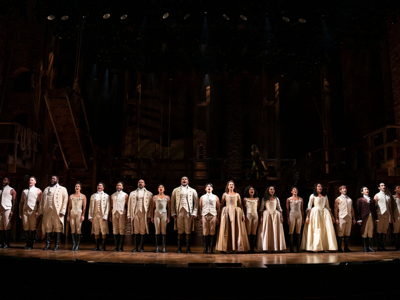
Photo credit: Joan Marcus
Understand Your Role in the World of the Show
The first step to standing out is understanding that you are not “just ensemble.” You are a fully realized character who exists within the world of the play. In order to bring that character to life, you have to create a backstory. Some larger roles might have clues in the text about what their character is like, or where they come from. If you can’t find any direct clues in the text, it’s time to get creative! Ask yourself:
- Who am I?
- Where have I come from?
- What do I want in this moment?
If you’re playing multiple tracks – villager, party guest, worker – each one should feel distinct. In a show like Les Misérables, ensemble members might shift from factory workers to revolutionaries. Each transition requires a change in physicality, energy, and intention.
When you build a clear internal life for each moment, your performance naturally becomes more compelling.
Specificity Is Everything
General acting reads as background; specific acting builds the world. Instead of “reacting to the scene,” decide exactly what you’re reacting to. If you’re in a crowd scene, don’t just look engaged – define your perspective.
Consider what your character might think of the following questions:
- Do you agree with what’s happening, or are you skeptical?
- Are you afraid, excited, distracted, or indifferent?
- Who are you watching onstage, and why?
In shows like Haispray, the ensemble often observes and comments on the action. Those moments only land when each performer has a clear, specific point of view.
The audience may not consciously track your individual choices, but they will feel the difference.
Commit Fully – Even When No One Is Looking
One of the biggest traps ensemble performers can fall into is “marking” their performance when they feel they aren’t the focus. But here’s the reality: someone is always watching you.
Audience members often notice ensemble performers who stay fully engaged at all times. That doesn’t mean overacting – it means maintaining truth and presence, even in the background. Seeing someone make informed, interesting choices as a background performer can be a highlight of a performance.
In high-energy shows like Newsies, the ensemble drives the momentum. If even a few performers drop their energy, the entire number can lose impact. Consistency and commitment is what separates a solid ensemble member from a standout one.
Master the Physical Vocabulary
Your body is one of your most powerful storytelling tools. Ensemble performers often communicate just as much through movement as they do through lines or lyrics. You can help develop character communication through:
- Posture
- Gesture
- Tempo
- Spatial awareness
Are you grounded and heavy, or light and quick? Do you take up space confidently, or do you shrink into the background?
Top Tip! Check out Laban Technique if you want a deeper dive into creating character bodies.
In a show like Chicago, physical precision and style are essential. The ensemble’s unified movement creates the aesthetic of the entire production, but within that unity, individual performers can still bring subtle personality to their roles.
Build Relationships Onstage
Even if you don’t have scripted dialogue, you are constantly interacting with others. Creating silent relationships adds depth and realism. Maybe you always gravitate toward the same scene partner. Maybe you react differently when a certain character enters. These choices build a layered, believable world.
When developing your onstage relationships, think about the following:
- Who do you know in the scene?
- Who do you trust?
- Who do you avoid?
In shows like Fiddler on the Roof the sense of community is essential. The ensemble isn’t just a group of individuals – it’s a network of relationships that makes the village feel real.
Listen – Really Listen
Strong ensemble work is rooted in active listening.
It’s easy to think of listening as something only important for actors with dialogue, but in reality, listening drives all performance. Your reactions should be influenced by what’s happening in real time, not pre-planned gestures. Every time you are acting in the scene, it’s important to remember that your character is experiencing the scene for the first time!
When you truly listen, your performance stays fresh and responsive. It also helps you stay connected to the emotional arc of the scene. Audiences can tell when performers are “waiting for their moment” versus genuinely engaging with what’s happening onstage.
Support the Story, Not Your Ego!
Standing out doesn’t mean stealing focus.
In fact, the most effective ensemble performers understand when to blend and when to shine. Your job is to serve the story first. There may be moments when the ensemble is meant to fade into the background, creating space for a principal character. Honor those moments. Then, when the focus shifts back to the group, you can fully step into the spotlight with everyone else.
Think of the ensemble in A Chorus Line. The entire show is about ensemble performers, yet it works because each character contributes to a larger narrative rather than competing for attention.
Theatre is A Collaboration
Ensemble roles are not smaller roles – they are different roles. They require versatility, awareness, and a deep commitment to storytelling. When you approach the ensemble with intention and care, you don’t just “blend in”. You become an essential part of what makes the show come alive!
Originally Published: March 21, 2026
Last Updated: March 21, 2026
Blog Written By:

Emma Houlahan
Canadian vocalist and actor now based in London.
More From Musicals
Welcome to StageAgent
Our mission is to provide actors, directors, teachers and backstage staff with the ultimate theatre research and education platform.
Enjoy amazing theatre resources: