Overview
Synopsis
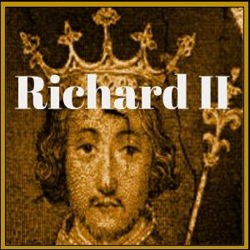
William Shakespeare’s Richard II chronicles the end of one king’s reign and the rise of another. In 1399, Richard II believes that he is the undisputed king of England and can therefore do anything he pleases, whether it is banishing his cousin, plotting the murders of his enemies, or taking land and estates to fund a war. After his uncle John of Gaunt dies, Richard’s greed and belief in his Divine Right to rule consumes him. In order to save England from a tyrant, John of Gaunt’s son Henry Bolingbroke returns to demand his father’s inheritance. The nobles of England divide into factions--those loyal to Richard, and those ready to rebel against the king’s corruption. Based on historical records, Shakespeare’s tragic tale of Richard II’s demise and Henry IV’s coronation is a beautiful cautionary tale about leadership, faith, and loyalty.
Show Information
Context
William Shakespeare’s Richard II was first performed in 1595, but rather than a big production at one of the Elizabethan playhouses, it was presented at the house of Edward Hoby, a scholar, soldier, diplomat, and member of Parliament. By this point in his career, Shakespeare had already written at least four of his history plays (all three parts of Henry VI and Richard III), and the genre was proving to be a popular one. Many of Shakespeare’s contemporaries also wrote history plays,
to read the context for Richard II and to unlock other amazing theatre resources!Plot
Act One
King Richard II, surrounded by royal pomp, arbitrates a dispute between his cousin Henry Bolingbroke and Thomas Mowbray, the Duke of Norfolk. Bolingbroke accuses Mowbray of embezzling money from the king and royal coffers; more than that, he accuses the Duke of plotting the murder of the Duke of Gloucester (the uncle of both Richard and Henry). Mowbray denies any wrongdoing, which prompts Bolingbroke to throw down his gage--a challenge to duel to the death. Richard agrees that
to read the plot for Richard II and to unlock other amazing theatre resources!Characters
Showing 8 of 28 characters
Character Portrayals
See StageAgent members who have performed roles in Richard II.
Want to be featured on this page? Update your credits.
Monologues
Scenes
Key Terms
In theatre and literature, abdication refers to a character formally renouncing power, responsibility, or a throne. This act often triggers major shifts in a story’s conflict and themes. It can symbolize sacrifice, weakness, or transformation depending on the context.
Relating to the reign of Queen Elizabeth I, marked by flourishing English drama and playwrights like Shakespeare and Marlowe.
An archaic or poetic word meaning 'from here' or 'as a result'; common in English Renaissance texts. This term plays a vital role in understanding theatrical structure and is commonly encountered in stagecraft or performance settings.
A dramatic genre that dramatizes historical events, especially English history, as seen in Shakespeare’s plays.
An old word meaning 'to this place,' frequently found in classical English drama. This term plays a vital role in understanding theatrical structure and is commonly encountered in stagecraft or performance settings.
Shakespeare’s acting company under royal patronage, instrumental in performing and popularizing his plays.
The use of performance or storytelling to promote political or ideological messages, especially in epic theatre.
A speech delivered by a character alone on stage, revealing inner thoughts or emotions to the audience. Common in Shakespearean plays.
A Tragedy is a form of drama that explores human suffering, conflict, and loss, often leading to a disastrous or fatal conclusion. Traditionally, the main character experiences downfall due to a personal flaw, poor judgment, or forces beyond their control. Tragedy aims to evoke pity and fear in the audience, leading to reflection and emotional release.
An old English word meaning 'why,' famously used in Shakespeare’s 'Romeo and Juliet' to express inquiry, not location.
Videos
Quizzes
Guide Written By:

Cindi Calhoun
Theatre teacher, director, writer, and seamstress