Overview
Synopsis
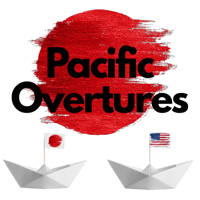
Taking place in 19th century Japan, the story concerns the culture clash sparked by America's 1853 mission to open up Japan to the West. Up to this point, Japan had been an island empire living in peace for centuries, undisturbed by foreign intruders. However, once Commodore Perry and the Americans arrive, a civilization of timeless tradition and seamless serenity begins to unravel under the impact of new ideas.
The show includes elements of traditional Japanese theatre (Kabuki and Bunraku). In keeping with Japanese tradition, female characters are often played by male actors depending on the producer's discretion.
Show Information
Characters
Showing 8 of 19 characters
Character Portrayals
See StageAgent members who have performed roles in Pacific Overtures.
Want to be featured on this page? Update your credits.
Songs
ACT ONE
- Prologue — Orchestra
- The Advantages of Floating in the Middle of the Sea — Reciter and Company
- There Is No Other Way — Tamate, Observers
- Four Black Dragons — Fisherman, Thief, Reciter, Townspeople
- Chrysanthemum Tea — Shogun, Shogun's Mother, Shogun's Wife, Soothsayer, Priests, Shogun's Companion, Physician, Sumo Wrestlers
- Poems — Kayama, Manjiro
- Welcome to Kanagawa — Madam and Girls
- March to the Treaty House — Orchestra
- Someone in a Tree — Old Man, Reciter, Boy, Warrior
- * Lion Dance — Commodore Perry
ACT TWO
- Please Hello — Abe, Reciter, American, British, Dutch, Russian and French Admirals)
- A Bowler Hat — Kayama
- Pretty Lady — Three British Sailors
- Next — Reciter and Company
A song with an asterisk (*) before the title indicates a dance number; a character listed in a song with an asterisk (*) by the character's name indicates that the character exclusively serves as a dancer in this song, which is sung by other characters.
Key Terms
A classical Japanese theatre form combining stylized movement, elaborate makeup, and historical or domestic stories.
Videos
Quizzes
Guide Written By:

Emma Houlahan
Canadian vocalist and actor now based in London.