
Overview
Synopsis
In the not-so-distant future, a terrible water shortage and 20-year drought has led to a government ban on private toilets and a proliferation of paid public toilets, owned and operated by a single megalomaniac company: the Urine Good Company. If the poor don’t obey the strict laws prohibiting free urination, they’ll be sent to the dreaded and mysterious “Urinetown.” After too long under the heel of the malevolent Caldwell B. Cladwell, the poor stage a revolt, led by a brave young hero, fighting tooth and nail for the freedom to pee “wherever you like, whenever you like, for as long as you like, and with whomever you like.” A brilliant satire modeled off the plays of Kurt Weill and Bertolt Brecht, Urinetown is a wickedly funny, fast-paced, and surprisingly intelligent comedic romp.
Show Information
Context
The inspiration for Urinetown came from book writer Greg Kotis as he was traveling through Europe and encountered pay-per-use toilets. He joined with composer and lyricist Mark Hollmann to create a satirical musical about a dystopian future in which everyone must pay to use the bathroom. Urinetown debuted at the New York International Fringe Festival and was quickly picked up for an Off-Broadway run at the American Theater for Actors from May 6 - June 25, 2001. The show then transferred to
to read the context for Urinetown and to unlock other amazing theatre resources!Plot
ACT ONE
At Amenity #9, the poorest, filthiest urinal in town, Officer Lockstock, a policeman, greets the audience and explains the terrible predicament of the residents of Urinetown. Penelope Pennywise, the proprietor of the dirtiest urinal, and her custodial assistant, Bobby Strong, discuss Old So-and-So, who has recently been carted off to Urinetown. As Lockstock continues his monologue, Little Sally, a precocious young girl, enters and warns Lockstock about the dangers of too much
to read the plot for Urinetown and to unlock other amazing theatre resources!Characters
Showing 8 of 18 characters
Interactive Character Map
Visualize how the characters in Urinetown connect and drive the story.
Understand the relationships that shape the story of Urinetown
- See how characters connect at a glance
- Explore alliances, conflicts, and dynamics
- Dive deeper into each role
Character Portrayals
See StageAgent members who have performed roles in Urinetown.
Showing 8 of 100 portrayals






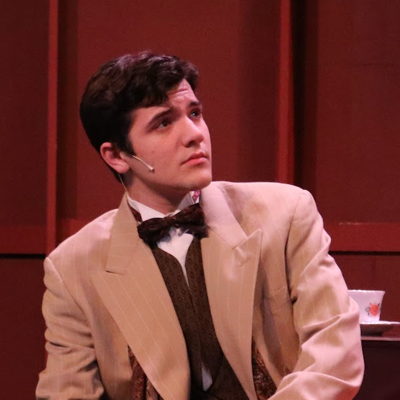

Want to be featured on this page? Update your credits.
Scenes
Songs
Showing 8 of 19 songs
A song with an asterisk (*) before the title indicates a dance number.
Themes, Symbols & Motifs
THEMES
Environmental Degradation and Resource Depletion
The foundational conflict of Urinetown centers on an ecological crisis brought about by a devastating, twenty-year drought. This severe environmental catastrophe has crippled the city's water supplies and forced a radical reorganization of society around the rationing of a dwindling natural resource. By elevating a basic biological necessity into a tightly controlled luxury, the musical explores how ecological collapse
to read about the themes, symbols and motifs from Urinetown and to unlock other amazing theatre resources!Quote Analysis
“It’s a privilege to pee.”
(Penelope Pennywise; Act 1)
This line is delivered by Penelope Pennywise, the strict warden of Public Amenity Number Nine, during her signature song in the first act of the musical. At this point in the story, a severe, twenty-year drought has led to a total government ban on private toilets, forcing the citizens to rely on paid public amenities controlled by the corrupt corporation Urine Good Company. A crowd of impoverished citizens, including Old Man Strong,
to read our analysis of select quotes from Urinetown and to unlock other amazing theatre resources!Key Terms
A powerful, resonant singing technique used in musical theatre to project high notes with chest voice.
A system of administrative procedures often satirized in theatre to expose inefficiency and impersonality.
A dramatic setting depicting a repressive future society, used to explore political and philosophical themes.
A dramatic style associated with Bertolt Brecht that encourages critical thinking rather than emotional involvement.
A form of self-referential drama where the play draws attention to its own theatricality. This device challenges the audience’s suspension of disbelief and is used in Epic Theatre and postmodern works.
Parody is a comedic imitation of a style, genre, or work that exaggerates its features for humorous or satirical effect. In theatre, it playfully mocks conventions, characters, or cultural icons while still relying on audience recognition of the original. Parody can both celebrate and critique its subject, often blurring the line between homage and ridicule.
Satire is a dramatic style that uses humor, irony, and exaggeration to criticize human behavior, social institutions, or political systems. In theatre, it highlights flaws and hypocrisies through wit and parody, encouraging audiences to laugh while also reflecting on serious issues. Satire can range from lighthearted comedy to biting social commentary, making it both entertaining and thought-provoking.

