Overview
Synopsis
Stephen Schwartz’s Wicked: The Untold Story of the Witches of Oz takes place before L. Frank Baum’s classic Wizard of Oz story ever began. Before Dorothy was even alive, two young girls met in the Land of Oz, became rivals, and then friends. One was born with emerald green skin, with a brilliant mind and a fiery spirit. The other was classically beautiful, with great ambition and incredible drive. The green-skinned Elphaba was ostracized by her family and by everyone at school. The beautiful Galinda was destined to be forever popular. Over the course of Wicked, we discover how these two young women became rivals and then the closest of friends – and how they ended up as the Wicked Witch of the West and Glinda the Good. Originally starring Idina Menzel and Kristin Chenoweth, Wicked is an amazing vehicle for two powerhouse actresses, and also features a large, strong ensemble.
Show Information
Context
Origins
Stephen Schwartz’s musical, Wicked: The Untold Story of the Witches of Oz, is based on the 1995 Gregory Maguire novel Wicked: The Life and Times of the Wicked Witch of the West. Stephen Schwartz worked with Emmy Award-winning writer Winnie Holzman to develop an outline for a plot that was condensed enough to be suitable for a musical, as the original novel is rather epic and sprawling. While the musical takes Maguire’s central idea of a retelling of the 1939 musical movie _The
to read the context for Wicked and to unlock other amazing theatre resources!Plot
Act One
Wicked opens with a celebration of the death of the Wicked Witch of the West. The citizens of Oz are elated, and dance joyously through the streets. They welcome Glinda the Good Witch of the North, who descends amongst them in a magic bubble to announce the official time of the Wicked Witch of the West’s death. As Ozians rail about the wickedness of the deceased witch, Glinda calls upon them to empathize with the young green-skinned girl named Elphaba, who was not always known as
to read the plot for Wicked and to unlock other amazing theatre resources!Characters
Showing 8 of 14 characters
Interactive Character Map
Visualize how the characters in Wicked connect and drive the story.
Understand the relationships that shape the story of Wicked
- See how characters connect at a glance
- Explore alliances, conflicts, and dynamics
- Dive deeper into each role
Character Portrayals
See StageAgent members who have performed roles in Wicked.
Showing 8 of 22 portrayals


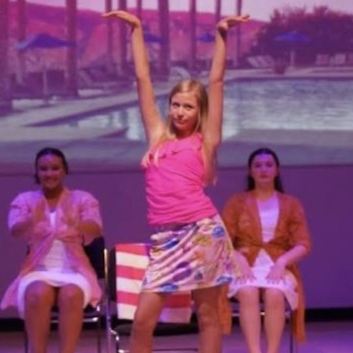


Want to be featured on this page? Update your credits.
Songs
Showing 8 of 21 songs
A song with an asterisk (*) before the title indicates a dance number.
Themes, Symbols & Motifs
THEMES
Looks & Appearance
The value attached to looks and appearance is a prominent theme of the musical. From the outset, we know that Elphaba is green and therefore out of place amongst her peers. At the beginning of the musical, Glinda takes us back in time to reveal the circumstances that led to Elphaba’s unusual appearance. She explains that, through no fault of her own, Elphaba’s exterior “verdigris” alienated her from her family. She is an outsider and the difference in her
to read about the themes, symbols and motifs from Wicked and to unlock other amazing theatre resources!Quote Analysis
“Unlimited,
My future is unlimited”
(Elphaba, Act 1)
Context: Elphaba sings a variation of this phrase a few times. She first sings it early in Act One in “The Wizard and I”. At this time, she is hopeful of her future and the prospect of finding a place in society for the first time. She believes the Wizard will be a kindred spirit and the future is rife with possibilities.
Analysis: Elphaba has a strong imagination and she knows that she can help to change the word for the better.
to read our analysis of select quotes from Wicked and to unlock other amazing theatre resources!Director Insights
Directorial Vision
At its core, Wicked is not merely a spectacle or a fairy-tale revision; it is a human story about the friction between moral integrity and political expediency, filtered through an unlikely friendship. Directors must resist the urge to let broad fantasy swallow the intimate, grounded relationships that form the show’s backbone. The show succeeds when the audience tracks the parallel, inverse journeys of Elphaba and Glinda: Elphaba shifts from a guarded outcast seeking approval to an uncompromising outlaw, while Glinda evolves from a self-absorbed socialite into a politically savvy leader who understands the tragic cost of compromise.
The primary directing challenge is balancing the show’s inherent camp and satirical wit with its deeply grounded political and personal stakes. If Oz feels entirely like a cartoon, the systemic persecution of the Animals and the
to read the director insights for Wicked and to unlock other amazing theatre resources!Discussion Questions
Big Question
Are people inherently good or evil, or are those labels created by the choices we make and the stories society tells about us?
Discussion Questions
- Elphaba and Glinda begin their time at Shiz University with intense mutual dislike. What specific moments or shared experiences cause their relationship to shift from rivalry to a deep, transformative friendship?
- How does the Wizard of Oz manage to hold onto his power and authority over the citizens of Oz despite lacking any real magical abilities?
- Fiyero begins the show as a carefree, superficial prince who avoids serious thought. How do his relationships with both Glinda and Elphaba force him to reevaluate his lifestyle and priorities?
- The Animals in Oz gradually lose their rights, speech, and status throughout the story. How does this storyline explore themes of scapegoating, prejudice, and social control?
- Elphaba starts out eager to work with the Wizard to earn acceptance and make a difference. At what point does her desire to fight for justice require her to break away from authority, and what are the consequences of that choice?
- Glinda chooses to work within a corrupt system to maintain her public standing and influence, whereas Elphaba rejects the system entirely. Which approach do you think is more effective for bringing about real change, and why?
- In "Defying Gravity," Elphaba makes a definitive choice about her future. How does this moment mark a turning point for her identity, and how does the public's perception of her change immediately afterward?
- Throughout the musical, Madame Morrible uses public announcements and rumors to shape how the citizens of Oz view current events. How does the show illustrate the power of propaganda and public perception?
- Nessarose's character arc is marked by frustration and tragedy. To what extent are her actions driven by her own choices, Elphaba's overprotectiveness, or the expectations placed upon her by others?
- Glinda accepts the role and title of "Glinda the Good," knowing the complicated truth behind Elphaba's reputation. Is her decision to maintain this public image a selfless sacrifice for the stability of Oz, a selfish pursuit of popularity, or a mix of both?
- The song "For Good" centers on the idea that people enter our lives for a reason and leave lasting impacts. In what ways do Elphaba and Glinda permanently change each other by the end of the story?
- Think about a relationship in your own life with someone whose personality or background was very different from yours. How did knowing that person shape your perspective or change who you are today?
Key Terms
An 11 o’clock number is a show-stopping song that appears late in a musical, usually near the climax. It is often performed by the lead character and delivers a surge of emotional or dramatic power. The number reenergizes the audience and sets up the finale.
An adaptation is a reworking of a story from one medium or cultural context into another, such as turning a novel into a play or updating a classic play’s setting. Adaptations often reinterpret themes, characters, and style for new audiences. They can range from faithful recreations to bold reimaginings.
A strong feeling of hostility between characters that drives dramatic tension and conflict.
A ballad is a song style that tells a story through simple, lyrical verses and a steady rhythm. In theatre, ballads are often slow and emotional, allowing characters to reveal deep feelings or reflect on personal journeys. They can be used to highlight romance, longing, or moments of dramatic intensity.
A powerful, resonant singing technique used in musical theatre to project high notes with chest voice.
In musical theatre, the script or spoken text of the show, not including the music or lyrics.
A magical or healing potion used symbolically or literally in theatre, especially in fantasy or mythic stories.
A group of performers who function as a unit in a production rather than as individuals with leading roles.
A dramatic device that transports the narrative to an earlier time to provide background or context.
A sense of seriousness and importance in a character's presence, often demanded in tragic or leadership roles.
The complete text of an opera, musical, or other extended vocal work, including all spoken dialogue and lyrics. The libretto provides the dramatic structure and narrative arc, serving as a guide for both performers and directors to align story and music.
A large-scale musical with elaborate staging, global appeal, and strong branding, such as *Les Misérables* or *Phantom*.
The use of performance or storytelling to promote political or ideological messages, especially in epic theatre.
A character who takes the blame for others, often central to tragic or moral narratives in drama.
Videos
Quizzes
Guide Written By:
