Overview
Synopsis
One fateful night, Brad Majors and his fiancée, Janet Weiss — a wholesome, well-behaved, utterly normal young couple in love — innocently set out to visit an old professor. Unfortunately for them, this night out is destined to be one they will never forget. A thunderstorm and a flat-tire force them to seek help at the castle of Dr. Frank ’N’ Furter, an alien, transvestite scientist with a manic genius and insatiable libido. Brad, Janet, and Frank’ N’ Furter’s cohorts are swept up into the scientist’s latest experiment. The night’s misadventures will cause Brad and Janet to question everything they’ve known about themselves, each other, love, and lust. A loving homage to the classic B sci-fi film and horror genres with an irresistible rock’n’roll score, The Rocky Horror Show is a hilarious, wild ride that no audience will soon forget.
Show Information
Context
The Rocky Horror Show was born out of creator Richard O’Brien’s love of the science fiction and B horror films of his youth. He set out to combine the unintentionally humorous elements of both genres with aspects of schlock-horror films, muscle flicks, and fifties rock and roll music; thus, like Dr. Frank ’N’ Furter’s monster, The Rocky Horror Show was born.
O’Brien began writing the musical in the early 1970s. At the time, he was living in London and struggling in his acting career. He
to read the context for The Rocky Horror Show and to unlock other amazing theatre resources!Plot
Act One
The Usherette, backed by the Phantoms, enter the theatre. They welcome the audience to their derelict cinema and let them know the type of “film” that the audience is in for by paying homage to classic science fiction and B horror movies of the 1940s-70s (“Science Fiction Double Feature”).
Janet Weiss and Brad Majors, two high school sweethearts have just left a wedding of two of their friends. The ceremony has inspired Brad himself to propose, which Janet happily accepts.
to read the plot for The Rocky Horror Show and to unlock other amazing theatre resources!Characters
Showing 8 of 12 characters
Interactive Character Map
Visualize how the characters in The Rocky Horror Show connect and drive the story.
Understand the relationships that shape the story of The Rocky Horror Show
- See how characters connect at a glance
- Explore alliances, conflicts, and dynamics
- Dive deeper into each role
Character Portrayals
See StageAgent members who have performed roles in The Rocky Horror Show.
Showing 8 of 43 portrayals






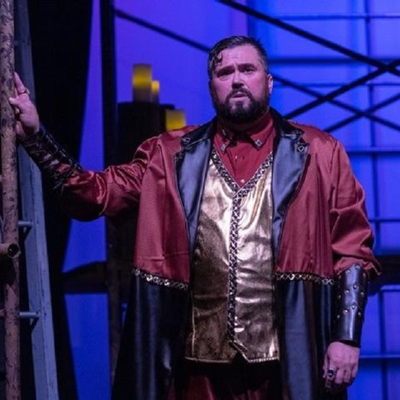

Want to be featured on this page? Update your credits.
Songs
Showing 8 of 20 songs
A song with an asterisk (*) before the title indicates a dance number.
Themes, Symbols & Motifs
THEMES
Sexual Liberation and Fluidity
At its very core, The Rocky Horror Show is a celebration of sexual liberation, breaking down the rigid, heteronormative boundaries of the early 1970s. Dr. Frank-N-Furter represents absolute sexual freedom and gender fluidity, operating completely outside conventional binaries. When the buttoned-up, traditional couple Brad and Janet enter the castle, their repressed desires are systematically unlocked. Unlike the 1975 film version, which
to read about the themes, symbols and motifs from The Rocky Horror Show and to unlock other amazing theatre resources!Quote Analysis
I see you shiver with antici………pation.”
(Frank-N-Furter; Act 1, Scene 3)
Delivered immediately after Frank's spectacular, grand-entrance descent into the castle's main parlor, this line serves as a meta-theatrical mastery of tension. The deliberate, agonizingly drawn-out pause before "...pation" forces the live audience and the terrified Brad and Janet to hang on Frank's every breath, breaking the standard conversational rhythm of conventional theater. It is a declaration of complete
to read our analysis of select quotes from The Rocky Horror Show and to unlock other amazing theatre resources!Director Insights
Staging The Rocky Horror Show live on stage—as distinct from its midnight-movie adaptation—requires directors to strike a precise balance between playful camp and high-stakes emotional gravity. The central dramatic question isn't just whether Brad and Janet will succumb to temptation, but how their fundamental worldviews are shattered by Frank 'N' Furter's radical liberation. One effective approach is to frame the show as a classic B-movie horror structure disrupted by glam-rock anarchy.
Directors often find success by treating Brad and Janet's journey not as a simple joke, but as a genuine awakenings. If the leads play the opening scenes with absolute, sincere conservatism, the sexual and emotional liberation of Act II resonates far more powerfully. Avoid playing the camp for laughs from the very first line; let the absurdity build organically against a backdrop of earnest emotional
to read the director insights for The Rocky Horror Show and to unlock other amazing theatre resources!Key Terms
The art of designing and arranging movement sequences for theatrical dance and physical storytelling.
A passionate, niche audience devoted to a specific play or performance style, often regardless of mainstream popularity.
A genre that combines elements of humor and morbidity, exploring serious themes through satire or irony.
A group of performers who function as a unit in a production rather than as individuals with leading roles.
A form of self-referential drama where the play draws attention to its own theatricality. This device challenges the audience’s suspension of disbelief and is used in Epic Theatre and postmodern works.
A revival is a new production of a play or musical after its original run has ended, often reimagined for a new generation of audiences. Revivals may stay faithful to the original staging or update elements like design, casting, or interpretation. They are a cornerstone of theatre tradition, keeping classic works alive and relevant.
Rock and roll is a musical genre that originated in the United States in the 1950s, combining rhythm and blues with country and gospel influences. Characterized by strong beats, electric guitars, and youthful energy, it quickly became a symbol of rebellion and change. In theatre, rock and roll often represents social upheaval, generational conflict, and the rise of new cultural voices.
A rock musical is a form of musical theatre that incorporates the rhythms, instrumentation, and energy of rock-and-roll into its score. Emerging in the late 1960s with shows like Hair, rock musicals often bring a contemporary, rebellious edge to the stage. They blend theatrical storytelling with the raw power of popular music to attract younger and more diverse audiences.
Satire is a dramatic style that uses humor, irony, and exaggeration to criticize human behavior, social institutions, or political systems. In theatre, it highlights flaws and hypocrisies through wit and parody, encouraging audiences to laugh while also reflecting on serious issues. Satire can range from lighthearted comedy to biting social commentary, making it both entertaining and thought-provoking.
Videos
Quizzes
Guide Written By:

Emma Houlahan
Canadian vocalist and actor now based in London.
