
Overview
Synopsis
Based on the popular Tony-winning musical Annie, Annie JR features a wonderful score written by Charles Strouse and Martin Charnin, including the Broadway smash hit, “Tomorrow”.
With a perfect combination of street-smarts and optimism, Annie warms the hearts of the audience as we witness her rise from next-to-nothing in New York City. She is determined to find her parents, who left her at the orphanage years ago. However things don’t quite work out the way she has planned. She does however thwart the plans of the evil Miss Hannigan and find a new family with billionaire Oliver Warbucks, secretary Grace Farrell, and her lovable pooch, Sandy.
Show Information
Context
Annie JR is a shortened 60 minute version of the beloved Broadway smash hit Annie.
Annie is based on the popular comic strip by Harold Gray, “Little Orphan Annie”, which ran in the New York Daily News beginning in the 1920s and, by the 30s and 40s, was one of the most widely read comic strips around. Lyricist Martin Charnin was given a book of “Little Orphan Annie” comic strips as a Christmas gift in 1971, and was inspired to create a musical comedy based on the main character.
The idea
to read the context for Annie JR and to unlock other amazing theatre resources!Plot
It is early December 1933, shortly after three a.m.. In the New York City Municipal Orphanage, the littlest orphan, Molly (age 6), cries out for her mother. The other orphans in the room -- Kate, the next to littlest, who is 7; Tessie, the cry baby, who is 10; Pepper, the toughest, who is 12; July, the quietest, who is 13; and Duffy, the biggest, who is 13 -- wake up and a fight ensues between Pepper and July. Annie, who is 11, has been up cleaning and breaks up the fight. She comforts Molly
to read the plot for Annie JR and to unlock other amazing theatre resources!Characters
Showing 8 of 20 characters
Character Portrayals
See StageAgent members who have performed roles in Annie JR.
Showing 8 of 169 portrayals
-

Loki kane
- stage manger / costume / set designer / louis howe / us. president Roosevelt, bundles, police (2026)




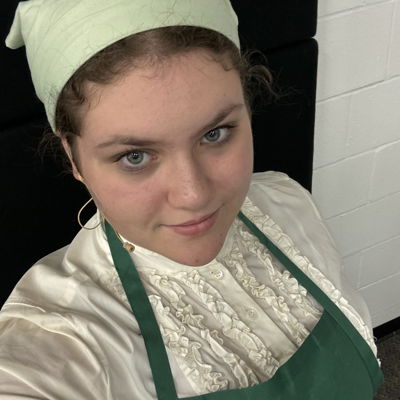


Want to be featured on this page? Update your credits.
Songs
- “Maybe” - Annie, Orphans
- “It's the Hard-Knock Life” - Annie, Orphans
- “It's the Hard-Knock Life (Reprise)”** - Orphans
- “Tomorrow” - Annie
- “Little Girls” - Miss Hannigan
- “Little Girls (Reprise)”** - Miss Hannigan
- “I Think I'm Gonna Like it Here”** - Annie, Grace, Servants
- “NYC” - Warbucks, Grace, Annie, Star-To-Be
- “Easy Street” - Miss Hannigan, Rooster, Lily
- “You Won't Be an Orphan For Long”** - Warbucks, Annie
- “Maybe (Reprise)” - Annie
- “You're Never Fully Dressed Without a Smile” - Tessie, July, Kate, Orphans
- “Easy Street (Reprise)”** - Miss Hannigan, Rooster, Lily
- “I Don't Need Anything But You”- Annie, Warbucks
- “Maybe (Second Reprise)” - Annie
- “Tomorrow (Reprise)” - Warbucks, Grace, Roosevelt, Annie, Orphans, Chorus
All songs noted with a double asterisk ( ** ) are NOT included in the Kids version.
A song with an asterisk (*) before the title indicates a dance number; a character listed in a song with an asterisk (*) by the character's name indicates that the character exclusively serves as a dancer in this song, which is sung by other characters.
Themes, Symbols & Motifs
THEMES
Hope and Optimism
The central theme of Annie is hope and optimism, embodied by the title character's unyielding belief in a better future despite overwhelming hardship. Set against the backdrop of the Great Depression, Annie's sunny disposition and signature song "Tomorrow" serve as a beacon, inspiring those around her—from the cynical orphans and bitter Miss Hannigan to the initially gruff Oliver Warbucks and even President Roosevelt. This theme, crafted in the 1970s as an
to read about the themes, symbols and motifs from Annie JR and to unlock other amazing theatre resources!Director Insights
Directorial Vision
Staging Annie successfully requires balancing its roots as a 1930s comic strip with genuine, grounded human heart. Because the show is built on broad caricatures, villainous archetypes, and bright, optimistic anthems, productions can easily slide into saccharine campiness or artificial squeakiness. The strongest productions treat the Great Depression setting not as a cardboard backdrop, but as a gritty, high-stakes environment that gives Annie’s hope true weight.
Your overarching production concept should highlight contrast: the cold, institutional starvation of the Municipal Orphanage versus the staggering, opulent scale of the Warbucks mansion; the desperate cynicism of Hooverville residents versus the relentless, infectious resilience of an eleven-year-old girl. When the world around Annie feels authentically harsh, her insistence that "the sun's come out
to read the director insights for Annie JR and to unlock other amazing theatre resources!Videos
Guide Written By:
