Overview
Synopsis
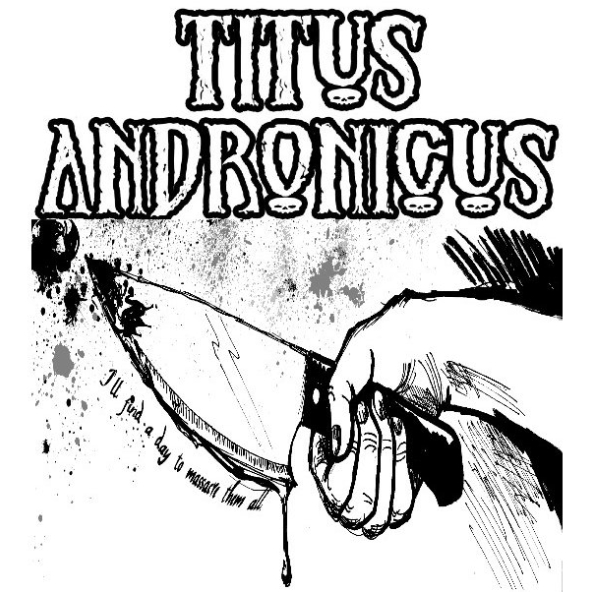
Titus Andronicus is the most revered general of Rome. Newly returned from his victories against the Goths, Titus looks forward to retirement, especially as these battles have cost him over twenty of his sons. But he has insulted and angered Tamora, the Queen of the Goths and now Empress of Rome. She--along with her sons Chiron and Demetrius--set out to take revenge upon Titus and his family, especially Lavinia, his innocent and virtuous daughter. Alongside the evil schemes of the Goths is Aaron, a Moor and the lover of Tamora, who by the end of the play repents that he ever did one good deed. An early Shakespearean tragedy, marked by visceral and bloody violence, Titus Andronicus is an examination of political turmoil and the destructive passions of revenge.
Show Information
Context
One of Shakespeare’s earliest tragedies, and the first to appear in print, Titus Andronicus was first performed (likely at Philip Henslowe’s Rose Theatre) in January of 1594, although it may have been written as early as 1590. Some scholars speculate that Shakespeare might have collaborated with another writer to compose the play, but this has never been confirmed.
Titus Andronicus--more so than any of his other plays--is a Roman play, heavily influenced by the style and subject matter of
to read the context for Titus Andronicus and to unlock other amazing theatre resources!Plot
Act One
In Ancient Rome, brothers Saturninus and Bassianus are ready to battle for who will claim the crown of emperor. Before they can physically fight, patrician Marcus Andronicus announces that his brother, the noble general Titus Andronicus, is returning from war against the Goths. He persuades the brothers to take Titus’ advice; they agree. Titus is welcomed back to the Capitol with a train that includes soldiers, Titus’ four remaining sons, his prisoners (Tamora, Aaron, Alarbus,
to read the plot for Titus Andronicus and to unlock other amazing theatre resources!Characters
Showing 8 of 20 characters
Character Portrayals
See StageAgent members who have performed roles in Titus Andronicus.


Want to be featured on this page? Update your credits.
Monologues
Scenes
Key Terms
An archaic word meaning 'to happen to' or 'befall,' often used in poetic or classical contexts.
Conceit in drama refers to an extended or elaborate idea, device, or metaphor that drives the structure, theme, or presentation of a play. It often highlights the playwright’s imaginative framework, such as using a single location, repeated situation, or symbolic image to unify the story. While sometimes seen as artificial, a conceit can create depth, cohesion, and stylistic distinction in a theatrical work.
A traditional comedic female character in British pantomime, typically played by a man in exaggerated costume and makeup.
To conceal one's true motives or feelings, a frequent tactic in English Renaissance drama.
Occurs when the audience knows more than the characters on stage, creating tension, humor, or poignancy.
Relating to the reign of Queen Elizabeth I, marked by flourishing English drama and playwrights like Shakespeare and Marlowe.
A literary device where the intended meaning differs from the literal meaning, often creating contrast or humor. Irony is used in theatre to provoke thought or elicit reactions from the audience by highlighting contradictions in character behavior or plot outcomes.
A recurring element, such as a symbol, image, or phrase, that reinforces a play’s themes. Motifs help unify the structure of a work and deepen its symbolic meaning.
A character of aristocratic background, frequently portrayed in plays dealing with class, privilege, or political power.
Historically associated with melancholy or ill temper, 'spleen' appears in poetic drama to express emotional imbalance.
A tailored costume representing formality, social status, or time period. Suits are used to define character and context.
A Tragedy is a form of drama that explores human suffering, conflict, and loss, often leading to a disastrous or fatal conclusion. Traditionally, the main character experiences downfall due to a personal flaw, poor judgment, or forces beyond their control. Tragedy aims to evoke pity and fear in the audience, leading to reflection and emotional release.
A protagonist whose downfall results from a fatal flaw, central to classical and modern tragedy.
Videos
Quizzes
Guide Written By:

Cindi Calhoun
Theatre teacher, director, writer, and seamstress