
Overview
Synopsis
Matilda is the story of an extraordinary little girl with extraordinary powers. The daughter of abusive parents, Matilda finds refuge in library books, which she reads quickly and in creating her own stories. Things are no better at school, where Matilda also must face a tyrannical and cruel headmistress, Miss Trunchbull, who believes in Crunchem Hall’s motto: “Bambinatum est Magitum,” or “Children are Maggots.” She finds companionship in her teacher, Miss Honey, though well-intentioned, is shy and fragile. Brave little Matilda knows she has to stand up against the adults in her world, and in doing so, discovers her own remarkable powers. Matilda’s bravery teaches Miss Honey and her classmates an important lesson -- that even though life can be hard, “nobody but me is gonna change my story” so “sometimes you have to be a little bit naughty.”
Show Information
Context
Matilda the Musical originated as an adaptation of Roald Dahl's 1988 children's novel Matilda, which follows a brilliant, telekinetic young girl who overcomes abusive adults through wit and courage. The Royal Shakespeare Company (RSC) commissioned the stage version in 2009 as part of its efforts to produce accessible, high-quality family theatre that blended Dahl's signature dark humour, mischief, and empowerment themes. Previous adaptations, including a 1996 Danny DeVito film, had
to read the context for Matilda and to unlock other amazing theatre resources!Plot
Act One
The show begins with a group of young children playing and singing about how wonderful they are, and their parents do not hesitate to chime in with their accolades as well! As this is happening a dolled-up to the nines Mrs. Wormwood is in labor with an unexpected new baby. After this little one is born, the Wormwoods are disgusted, despite the doctor explaining how much of a miracle this little baby girl is. Mr. Wormwood wanted a boy and Mrs. Wormwood would rather be at her
to read the plot for Matilda and to unlock other amazing theatre resources!Characters
Showing 8 of 25 characters
Interactive Character Map
Visualize how the characters in Matilda connect and drive the story.
Understand the relationships that shape the story of Matilda
- See how characters connect at a glance
- Explore alliances, conflicts, and dynamics
- Dive deeper into each role
Character Portrayals
See StageAgent members who have performed roles in Matilda.
Showing 8 of 208 portrayals





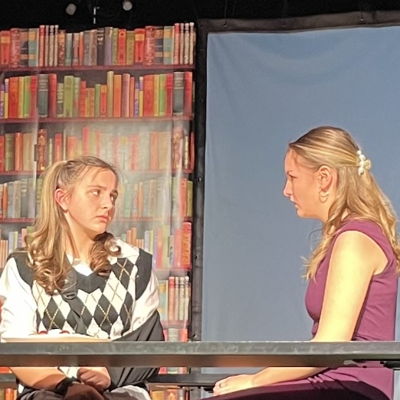


Want to be featured on this page? Update your credits.
Songs
Showing 8 of 22 songs
A song with an asterisk (*) before the title indicates a dance number.
Themes, Symbols & Motifs
THEMES
Rebellion Against Oppression
One of the central themes in the stage musical Matilda is rebellion against oppression, portrayed through the children's collective stand against tyrannical adults, particularly Miss Trunchbull. This theme is amplified in songs like "Revolting Children," where the word "revolting" plays on its double meaning—both disgusting and rebellious—celebrating the children's defiance as they overthrow Trunchbull's regime at Crunchem Hall. Tim Minchin's
to read about the themes, symbols and motifs from Matilda and to unlock other amazing theatre resources!Quote Analysis
"Nobody but me is gonna change my story / Sometimes you have to be a little bit naughty."
[Matilda (sung in "Naughty," Act 1)]
This iconic refrain from Matilda's solo number in Act 1 establishes her agency and worldview early in the musical. Sung as she justifies her small acts of rebellion against her neglectful family, the lines assert that personal change requires proactive, even mischievous action rather than passive acceptance. Minchin's playful yet pointed lyrics encapsulate the
to read our analysis of select quotes from Matilda and to unlock other amazing theatre resources!Director Insights
Directorial Vision
Matilda the Musical operates on a distinct style of heightened storybook realism. The show is not merely a children’s story; it is a dark, funny, and deeply earnest confrontation between innocence and institutional tyranny. One effective approach is to view the entire production through the lens of a child’s magnified perspective. In Matilda’s world, cruel adults are not just unkind—they are monstrous caricatures, while small acts of kindness carry immense emotional weight.
To make the show resonate, balance Tim Minchin’s sharp, satirical wit with genuine vulnerability. If the production leans too far into cartoonish farce, Act II loses its heart. Conversely, if it becomes overly bleak, the show loses its energy and whimsical charm. Keep the central dramatic focus on the power of storytelling and agency: Matilda shows young people that even if you are small,
to read the director insights for Matilda and to unlock other amazing theatre resources!Discussion Questions
Big Question
When those in authority abuse their power, what is our responsibility to stand up to them—and how far should we go to set things right?
Discussion Questions
- In the opening number, "Miracle," the parents express an overwhelming, almost delusional devotion to their children. How does this setting establish the atmosphere of Matilda's world, and how does her own family's reaction to her contrast with these societal expectations?
- Mr. and Mrs. Wormwood constantly dismiss reading and intellectual pursuits in favor of television and quick financial schemes. What does their reaction to Matilda's love of books reveal about their values, and why might they find her intelligence so threatening?
- Matilda uses storytelling—specifically the tale of the Acrobat and the Escapologist—to process her feelings and cope with her reality. Why is this narrative device significant to her journey, and what does it reveal about her inner life?
- Miss Honey and Miss Trunchbull represent two completely opposing approaches to authority and education. What specific strategies does each character use to influence the children, and what makes Miss Honey's quiet strength effective against Trunchbull's tyranny?
- In songs like "Naughty," Matilda asserts that "even if you're little you can do a lot." How does the musical handle the ethics of a child breaking rules or getting revenge when adult systems fail to protect them?
- Miss Trunchbull views childhood as a condition that needs to be disciplined and eradicated, famously calling children "maggots." How does her background as a former Olympic hammer thrower inform her approach to running Crunchem Hall?
- Mrs. Phelps, the librarian, serves as Matilda's first primary adult ally. How does their relationship shape Matilda's development, and what role do community spaces like libraries play in protecting vulnerable characters in the story?
- In "When I Grow Up," the children sing about their imagined futures and the freedom adulthood will bring. How does this song highlight the contrast between a child's perception of growing up and the actual reality faced by adults like Miss Honey?
- Bruce Bogtrotter's forced consumption of the chocolate cake begins as a cruel punishment but turns into an unexpected moment of triumph for the students. How does this scene shift the power dynamic between Miss Trunchbull and the children?
- Near the climax, the song "Revolting Children" uses wordplay on the word "revolting" (meaning both disgusting and rebelling). How do the students reclaim this label, and what does this moment signify for their collective identity?
- Miss Honey carries deep trauma from her upbringing under Miss Trunchbull, which has rendered her passive for most of her adult life. What enables her to finally find her voice and break free from her aunt's control by the end of the musical?
- Matilda uses her mind—both her sharp intellect and her telekinetic powers—to change a story that seems unfairly written. Have you ever encountered a situation that felt inherently unfair, and what strategies did you use to speak up or change the outcome?
Key Terms
An adaptation is a reworking of a story from one medium or cultural context into another, such as turning a novel into a play or updating a classic play’s setting. Adaptations often reinterpret themes, characters, and style for new audiences. They can range from faithful recreations to bold reimaginings.
A powerful, resonant singing technique used in musical theatre to project high notes with chest voice.
Casting performers in roles not matching their gender identity, used for artistic effect or inclusivity.
A group of performers who function as a unit in a production rather than as individuals with leading roles.
A member of the ensemble with a named or minor speaking role within a larger group.
The complete text of an opera, musical, or other extended vocal work, including all spoken dialogue and lyrics. The libretto provides the dramatic structure and narrative arc, serving as a guide for both performers and directors to align story and music.
A literary and theatrical style blending realistic narrative with fantastical elements to explore complex truths.

